

Agentforce was the word of the week at Dreamforce 2026. It was on the keynotes, on the show floor, in every partner pitch and every product demo. And rightly so — AI is genuinely reshaping how companies configure, price, and quote, and the organizations that get ahead of it will have an advantage for years.
But if you walked the Moscone Center this year, you noticed something else. The leaders running the systems those agents will eventually operate on were asking a different question, usually quietly, usually over coffee or in a hallway. Not will our CPQ need to change, but what do we actually do about it now?
That conversation was not happening on the main stage. This year, it was happening a five-minute walk away.
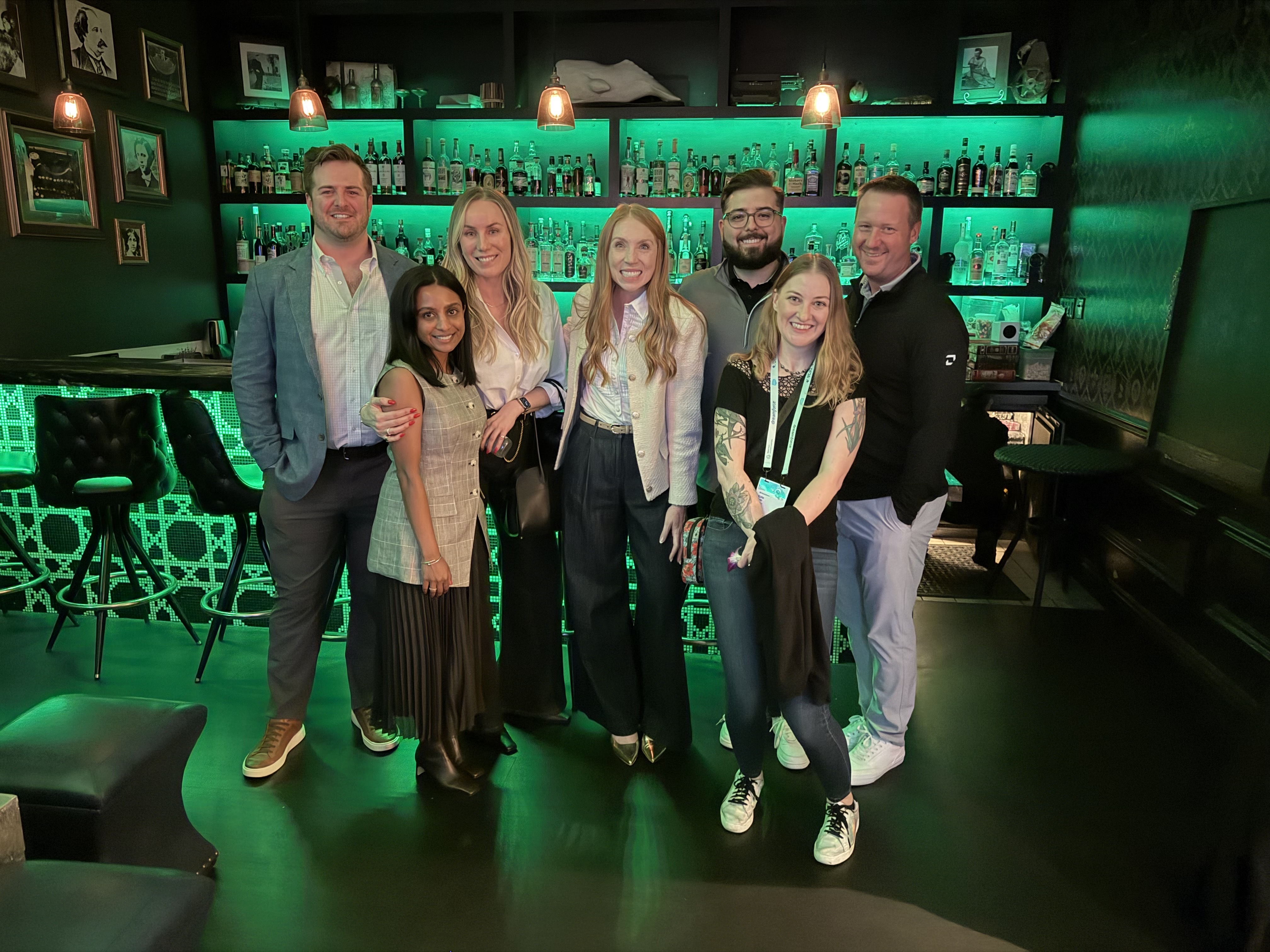
For Zaelab, Dreamforce 2026 meant three days at the CPQ Recovery Lounge, the side event we co-hosted with ServiceNow at Novela on Mission Street, September 14–16. We built it for one reason: to give revenue, RevOps, and technology leaders a place to have an honest conversation about their quoting process — away from the keynote theater, away from the vendor pitches, and away from the assumption that the only path forward is the one your current platform happens to own.
Why We Built the Lounge in the First Place
The state of Salesforce CPQ is no longer a secret. Salesforce has made a deliberate decision to move its investment into Revenue Cloud Advanced, and its legacy CPQ platform — the one enterprise teams have spent years configuring, customizing, and building their revenue operations around — is now in maintenance mode. The platform still works. It is still supported. But it is no longer where the roadmap is.
We wanted to be clear about what that means, and what it doesn't. It doesn't mean every organization needs to act this quarter. For many customers, staying on Salesforce CPQ for a defined window is the right call, and Salesforce's own successor, Revenue Cloud Advanced, is a legitimate path for organizations that are deep in the ecosystem and ready to invest in a migration. We said so at the lounge, and we'll say it in our posts: the decision is not whether Salesforce got it right. The decision is what is right for your architecture, your revenue model, and your migration capacity.
%20(4).png)
What we saw over the three days is that most leaders had not yet had that decision laid out in front of them honestly. They had heard the rumor. They had seen the end-of-life page. They had not had a conversation where a neutral party walked through the actual options — and the honest tradeoffs of each one. That was the gap we built the lounge to close.
"Most of the people we met at the lounge had already heard that Salesforce CPQ is in maintenance mode. What they hadn't had was the conversation: what that actually means for their operation, what the real options are, and how to weigh them — without anyone in the room trying to sell them a platform." — Alex Bell, CCO at Zaelab
— Alex Bell, CCO at Zaelab
The CPQ Recovery Lounge Conversations
Novela is San Francisco's answer to the question "where do you take people who have spent a week in a convention center and need the world to get quieter for a few hours." Hand-crafted cocktails, warm lighting, thoughtful design — and, for us, a reason to structure the week around three conversations rather than a dozen.
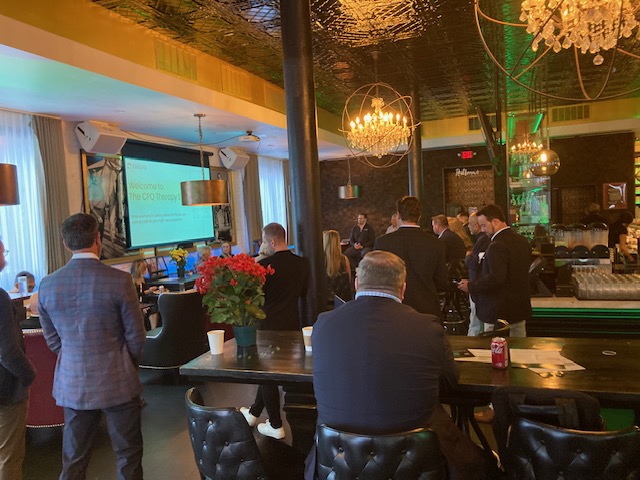
The week opened on Monday with the kickoff at Novela, an evening of cocktails, chef-made bites, and off-the-record conversation with the people who know what's at stake in this market shift. Tuesday's centerpiece was the CPQ Therapy Session, hosted by Zaelab CCO Alex Bell and Chris Shutts — Head of CPQ at ServiceNow, and the founder of BigMachines and Logik.ai, the two companies that effectively built the CPQ category. The format was simple: open, honest, peer-level. Bring your current quoting process. Bring your frustrations. Leave with a clearer picture of what other organizations have done in the same situation.
Wednesday's High Tea, High Spirits reception gave teams a final, low-pressure block of time before Dreamfest — where Chris Shutts gave a direct read on what's going on in the CPQ market, including what he's seeing from the organizations that have already moved, and what he thinks the next two years will look like.
.png)
The people in the room were mostly directors and above in revenue, operations, sales, service, and technology — which is who the lounge was reserved for. Free access, no pitch, no product theater. Just dialogue. And the conversations were remarkably consistent.
Three things came up again and again.
1. The maintenance-mode math.
Most organizations knew Salesforce CPQ was in maintenance mode. Far fewer had actually worked through what that means operationally: no new capabilities, a widening gap versus Revenue Cloud Advanced, and a migration that is a rearchitecting exercise, not an upgrade. Custom rules, product catalogs, approval workflows, and pricing logic built on the old framework don't move cleanly. The leaders who had documented their configuration were in a fundamentally stronger position than the ones whose rules lived in tribal knowledge — and most of them knew which side of that line they were on.
2. The Agentforce sequencing problem.
Teams with AI-agent rollouts planned — or in flight — discovered that the CPQ decision and the Agentforce decision can't be made sequentially. An agent running on top of undisciplined quoting logic automates the problems. The organizations getting value from AI-assisted revenue management are the ones that treated CPQ modernization as a process exercise before it became a technology one.
"When a team tells us they're planning an Agentforce rollout, our first question is what happens to the quoting logic underneath it. We're seeing more organizations sequence those two decisions together than they are separately — and the ones that do are the ones that come out ahead."
— Sean McVay, Director, Solution Engineering at Zaelab
3. The options question.
This was the one we cared most about. Many leaders believed the choice was binary: stay on Salesforce CPQ, or migrate to Revenue Cloud Advanced. The consistent answer we gave — and the one Chris Shutts reinforced — is that the real menu is at least three paths. Migrate to Revenue Cloud Advanced if your architecture and revenue model fit it. Move to a composable CPQ, like ServiceNow CPQ, if you want the configuration and pricing engine to work alongside your existing CRM and systems of record without a forced rip-and-replace. Or make a deliberate, dated decision to stay on Salesforce CPQ longer, with your eyes open about what you're deferring. Every one of those is a legitimate answer for the right organization. None of them requires you to be wrong about the others.
"The same question came up at every one of our sessions, in some form: stay, migrate to Revenue Cloud Advanced, or go composable. What changed this year is that organizations finally want to hear all three answers before they pick one. Our job is making sure they hear them from a party that isn't selling them any of the three."
— Adam Menzies, COO at Zaelab
What mattered was that the decision be made on the full menu, with the tradeoffs understood, rather than by default or by pressure.
%20(2).png)
The Message We Wanted to Land
We went to Dreamforce with one message: you have options, and you should know them before you're forced to choose.
Not "Salesforce is wrong." Not "migrate this quarter." Not even, really, "ServiceNow CPQ is better." It's something quieter than that: the leaders who are going to make the best CPQ decision in the next 12–24 months are the ones who have mapped what they actually have — where a quote goes after it leaves CRM, what's documented versus tribal, which channels you quote through today and which you'll add next year — before they commit to any platform at all. The platform is a smaller part of that decision than most organizations assume. The process underneath it is the part that travels with you no matter where you land.
That's the work we do at Zaelab, whether the answer turns out to be Revenue Cloud Advanced, ServiceNow CPQ, or a well-scoped hold. And it's why we built a room where that work could be talked about honestly, with the people who are living it, during the week the whole industry was talking about agents.
%20(3).png)
From Dreamforce to the Next Conversation
The contacts that came out of the CPQ Recovery Lounge span manufacturing, distribution, and technology — organizations with complex buying workflows, mature Salesforce implementations, and revenue leaders who are now working through the decision with a full menu of options in front of them. A number of those conversations have already moved into diagnostics: mapping the real state of the quoting process, documenting the rules, and scoping what a migration — or a hold — would actually take.
If you missed Dreamforce, the two posts that frame what we saw are worth a read:
- CPQ, Agentforce, and Revenue Management at Dreamforce 2026: What RevOps Leaders Need to Know
- Is Salesforce Discontinuing CPQ? Your Alternatives, Compared
And if you were at the lounge and want to continue the conversation you started — or you weren't, and you want to hear what we heard — get in touch. We'll map your modernization path and timeline, and we'll do it against the full menu of options, whichever way you lean.


