In Part II, Chapter 1 of the The Ultimate Guide For Distribution Digital Transformation, we explored why advanced user experience has become the engine behind B2B self-service adoption — and why distributors must resist the temptation to copy B2C.
Today’s chapter builds on that foundation. Once teams understand why UX drives digital adoption, the natural question becomes: Where should we focus, and what does “good” actually look like in B2B?
That’s the purpose of the B2B UX Maturity Model. It helps distributors understand where their digital experience stands today, and what investments will meaningfully increase self-service adoption, conversion, and customer loyalty.
From there, we shift into the core buying and account experiences that have the greatest impact. While many organizations spend months polishing pages that have little influence on revenue, a small set of workflows truly determine whether customers stay in self-service or fall back to phone, email, and reps.
Let’s start with the maturity model.
Most B2B portals don’t fail because of the lack of features. They fail because the experience doesn’t support how buyers actually operate. This five-level maturity model gives distributors a clear sense of the journey from “digital catalog” to “experience-led revenue driver.”
Platforms at this stage function more like a static online catalog than a transactional channel. Buyers can browse products, but there is no login, no pricing, and no real way to transact.
Outcome: Low adoption, heavy reliance on reps, minimal digital revenue.
Basic ordering becomes possible. Customers can log in, place simple orders, and view order history. But the experience supports only the most straightforward tasks.
Outcome: Adoption is limited to trained or motivated users. Most customers still view the portal as optional.
This is where many modern B2B platforms sit today:
The portal finally supports core buying behaviors.
Outcome: Growing adoption and measurable improvements in digital conversions.
The experience becomes tailored, contextual, and aligned with how each customer buys:
Outcome: High adoption, reduced support volume, and a measurable competitive edge.
Experience-led platforms are continuously refined through data and customer input. The portal becomes not just a transaction channel but the preferred way customers and sales teams work.
Outcome: Digital drives significant revenue, cost reductions, and loyalty — with ROI that compounds over time.
Advancing through these levels helps align the digital experience with the realities of B2B purchasing.
Many B2B organizations waste time perfecting pages that contribute little to customer adoption or revenue. In distribution, a handful of workflows consistently determine whether digital becomes the default.
Let’s take a look at the elements to focus on.
Unlike B2C customers who can come to your website just to browse, B2B buyers arrive with a clear purpose: find a product, check availability, reorder something familiar, or access account tools.
A high-performing homepage:
Think of the homepage as the air-traffic controller, not a design showcase.
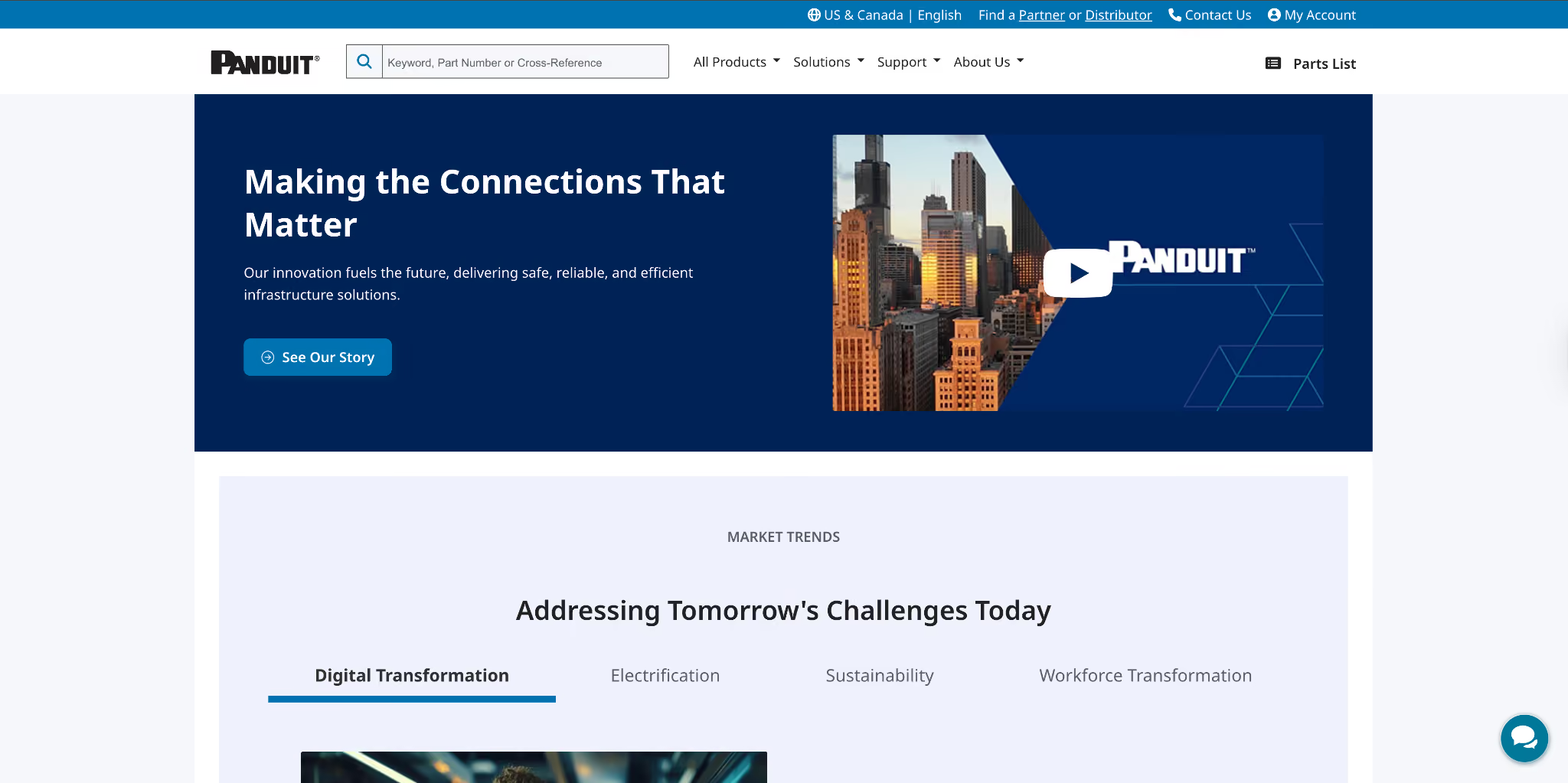
Large catalogs make navigation one of the most critical elements in B2B UX. Organize it around customer mental models — by application, industry, or use case — not internal product hierarchies.
High-performing navigation also integrates:
When buyers can’t find what they need, adoption collapses. Navigation is how you prevent that.
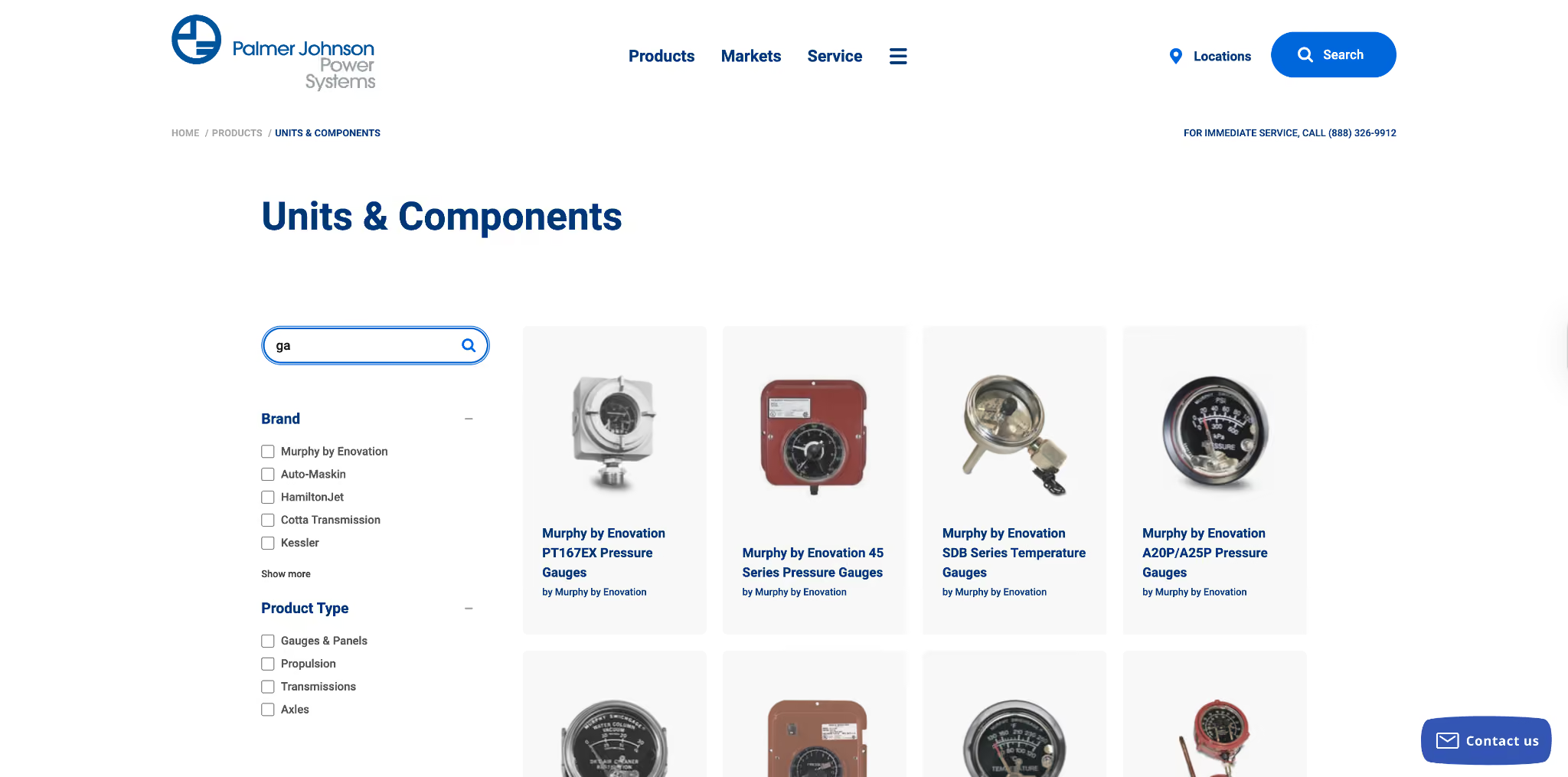
The PLP is where buyers narrow choices, compare options, and begin building carts. To support high-volume, spec-driven purchasing, PLPs should offer:
The more complex the catalog, the more essential a well-structured PLP becomes.
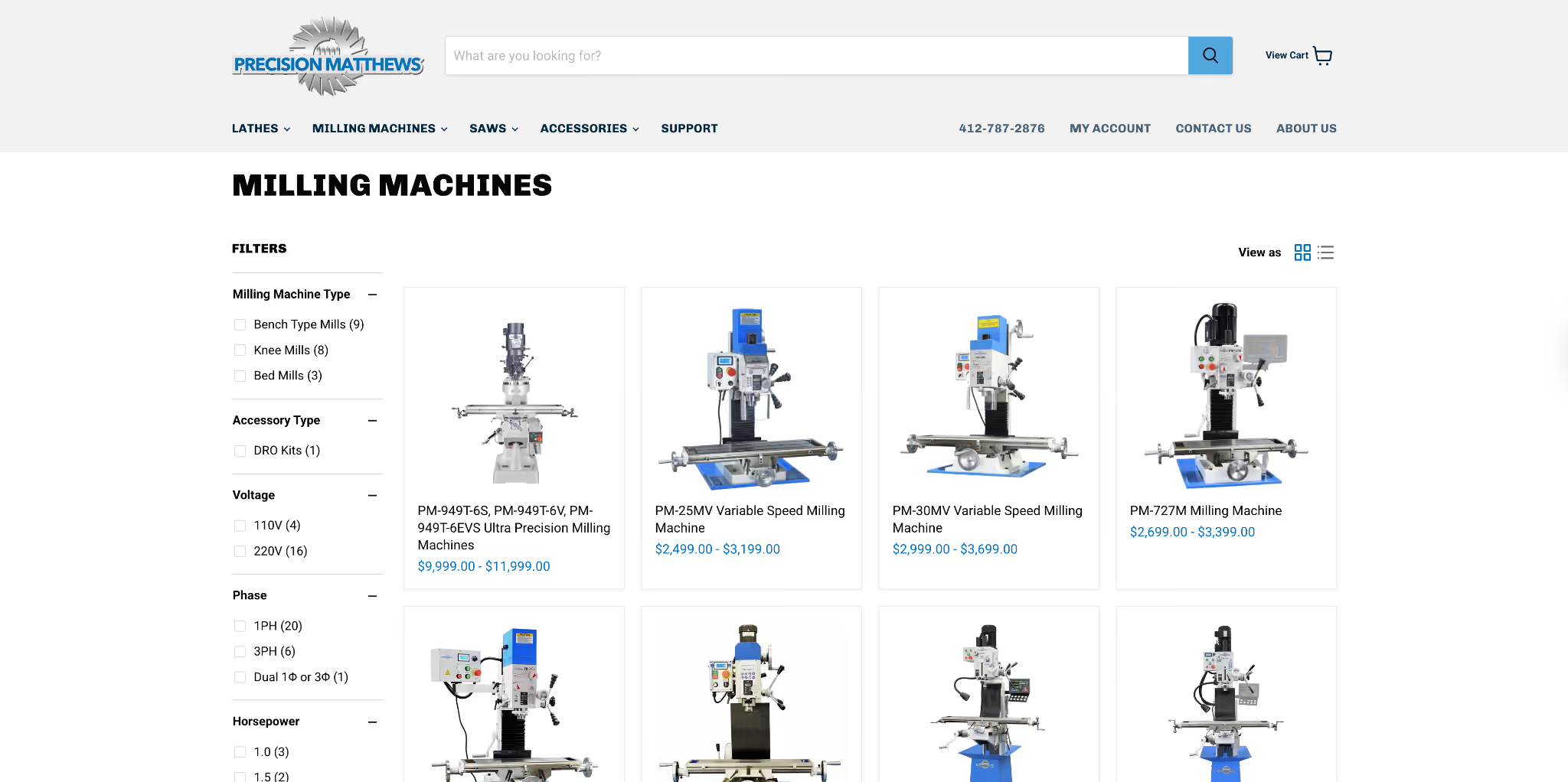
In B2B, the PDP often determines whether a buyer proceeds or exits. It must answer every question a spec-driven purchaser might have.
Strong PDPs include:
A confident buyer is a converting buyer.
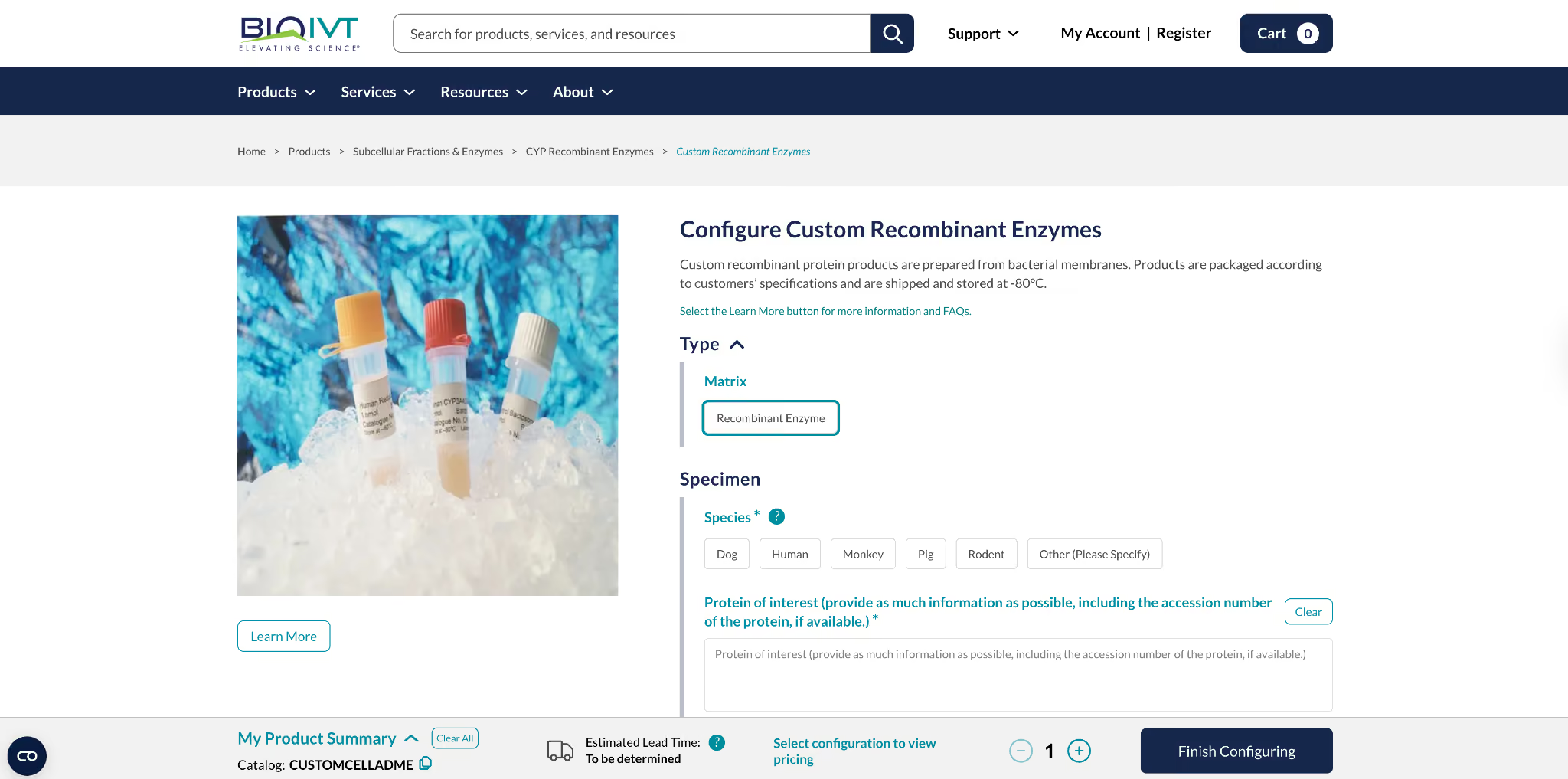
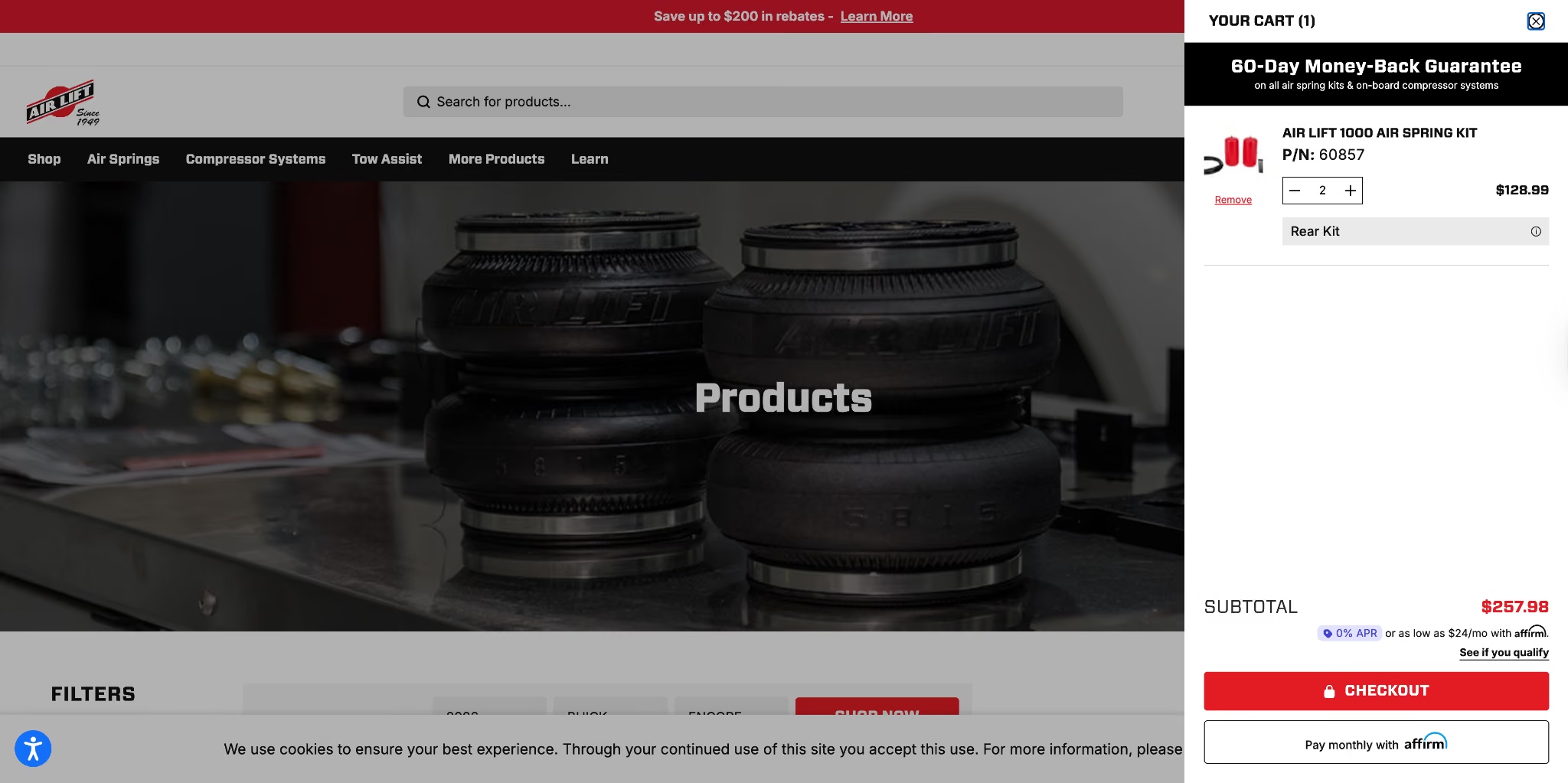
In distribution, the cart isn’t a checkout form — it’s a staging ground for large, multi-line orders.
A B2B-ready cart supports:
When buyers can manage complexity without friction, they stay in self-service.
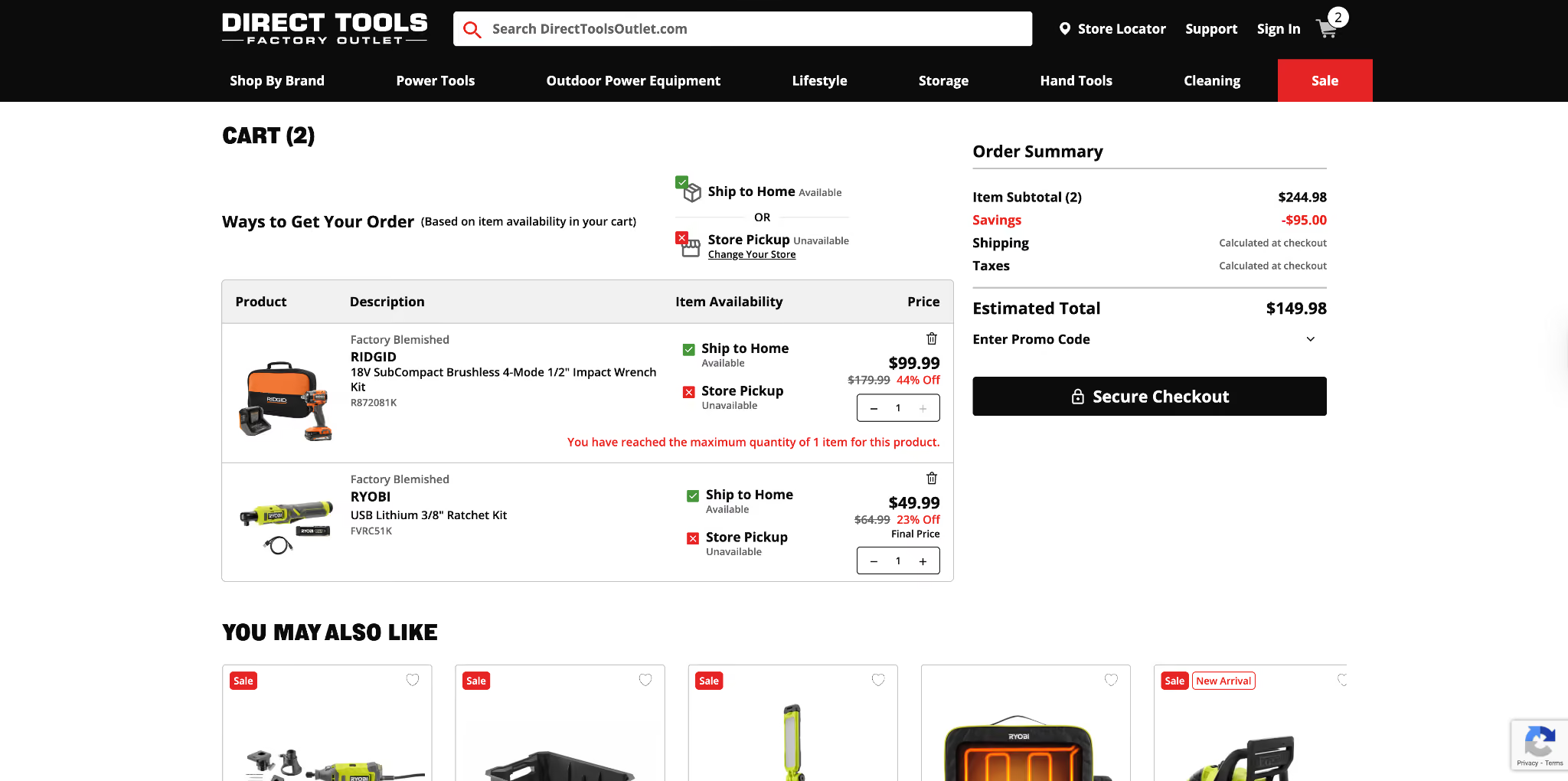
B2B checkout must reflect corporate workflows — not B2C simplification.
Critical capabilities include:
B2B buyers aren’t “shopping” — they’re completing a task. The checkout must honor that.
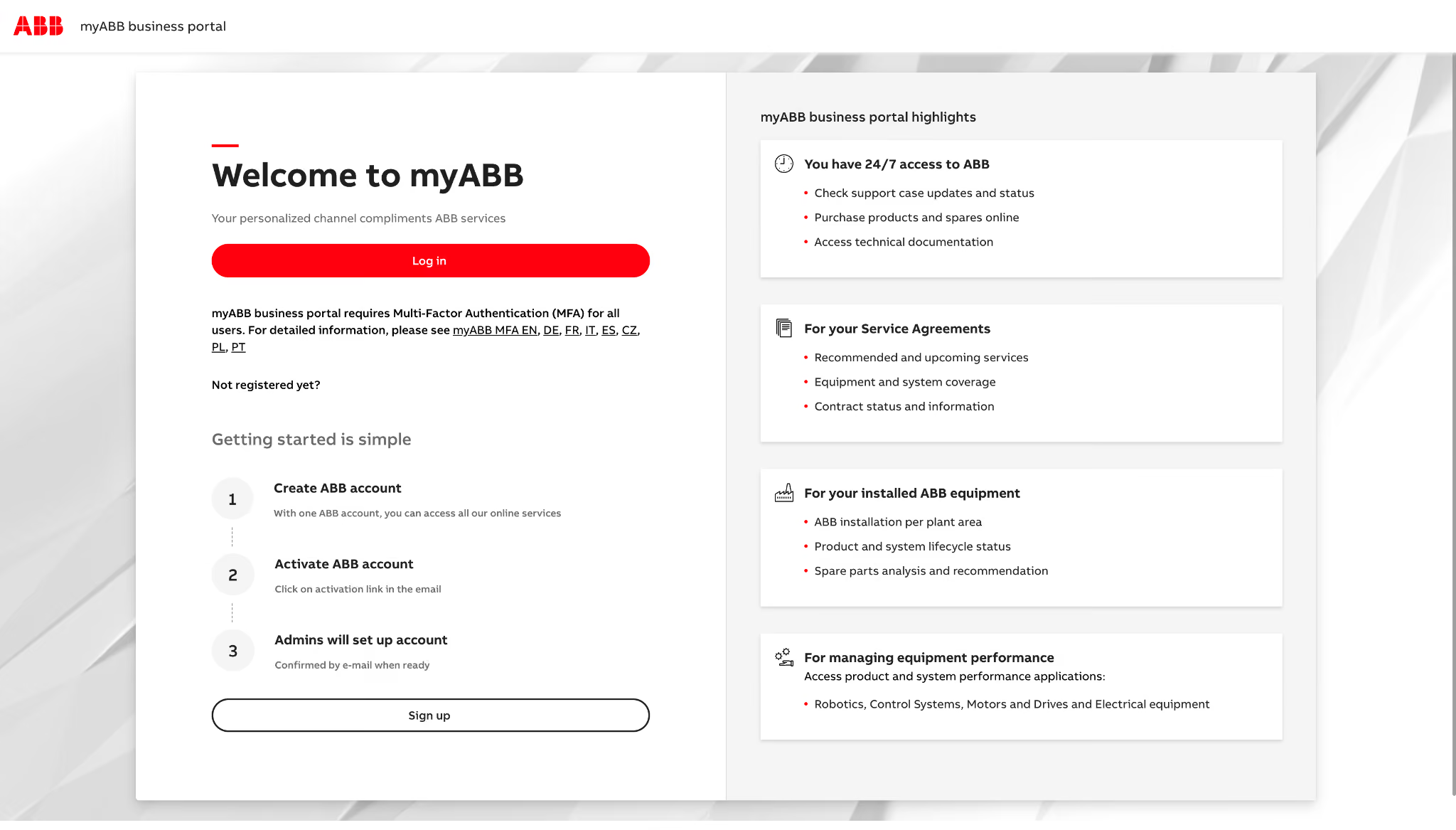
Distributors often over-gate content, which suppresses adoption. The right balance is:
Registration should be simple, supported by ERP/CRM integration, and designed around role-based permissions.
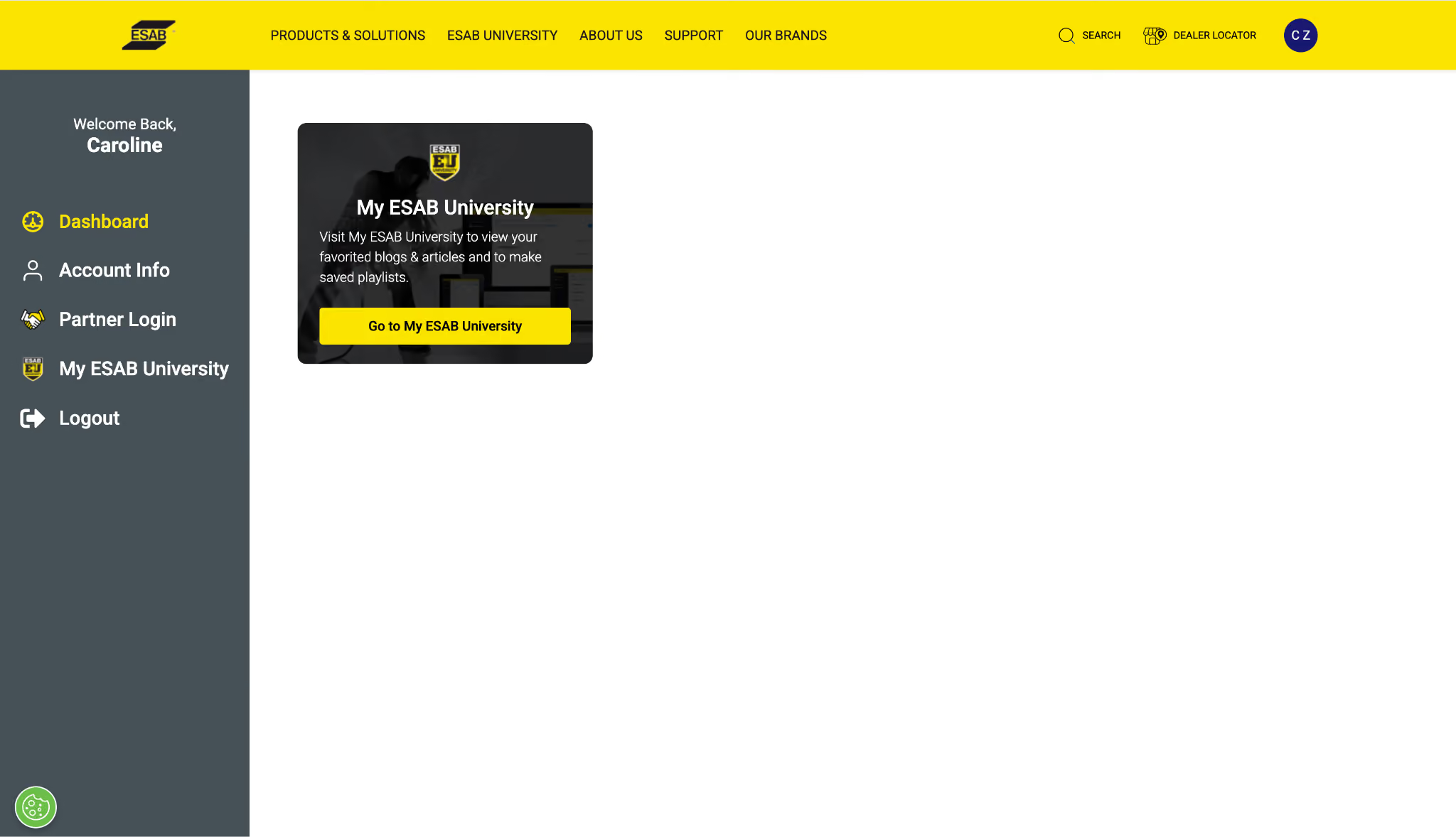
Account areas are often the most visited pages in B2B — yet the most neglected.
A strong account experience provides:
If your account area doesn’t work well, your customers won’t stay digital.
Distributors achieve the highest digital adoption when they prioritize function over flash and design around how buyers actually work. Successful self-service experiences make it easy to:
When these flows are intuitive, your platform stops being a secondary channel and becomes the preferred one.
To go deeper into how leading distributors modernize their digital foundations and build a transformation roadmap, download The Ultimate Guide to Digital Transformation in Distribution.
Are you leading the way or falling behind?
Learn where your B2B business stands compared to industry competitors.
Request a Proposal
